

Last Updated: October 28, 2026
Quick Summary
Minimalist interior design rules in 2026 focus on warm, layered minimalism rather than cold, empty rooms, balancing comfort with restraint. The defining moves are warm neutrals, natural textures, hidden storage and clean lines, with function first and negative space treated as a material.
- Warmth comes from texture and tone, not from adding more accessories.
- Use roughly 60% dominant neutral, 30% secondary warm tone and 10% accent.
- Keep a clear path of at least 30 inches between every doorway.
- Cap surface decor at three objects: one functional, one textural, one personal.
- Layer three light sources per room: ambient, task and accent.
Table of Contents
- What Minimalist Interior Design Rules Actually Mean in 2026
- Warm Minimalist Interior Design: Making Pared-Back Rooms Feel Inviting
- Building a Minimalist Color Palette With Warm and Earthy Tones
- Minimalist Living Room Ideas That Balance Function and Form
- A Measurable Decluttering and Editing Process for Every Room
- Minimalist Interior Design Mistakes That Make Rooms Feel Sterile
- Minimalism vs Maximalism: What Changed in 2026 Design Trends
- Furnishing Your First Minimalist Apartment on a Budget
- Frequently Asked Questions
What Minimalist Interior Design Rules Actually Mean in 2026
Minimalist interior design rules in 2026 are less about emptying a room and more about deciding what earns its place. The core shift: warm, layered minimalism is an alternative to the cold, gallery-white version, balancing comfort with restraint.
The Birla Opus roundup of minimalist interior trends for 2026 points to warm neutrals, natural textures, hidden storage and clean lines as the defining moves of the year.
The core principles behind every pared-back room
Six principles hold up across every room type:
- Function first. If a piece doesn't solve a problem, it doesn't stay.
- Negative space is a material. Empty floor and wall space create visual balance.
- Clean lines over ornament. Simple silhouettes reduce visual stimuli.
- One statement piece per room. Not three competing ones.
- Hidden storage beats displayed storage. Clutter is the real enemy, not color.
- Every object gets a purpose. Purposeful decor only.
How 2026 minimalism differs from the stark version
In 2026, warm tones, tactile textures and organic shapes do the work that bare white walls used to. Forbes' 2026 interior design trends coverage frames the year around longevity, function and meaning, which is minimalism's original promise finally being kept.
Warm Minimalist Interior Design: Making Pared-Back Rooms Feel Inviting
Warm minimalist interior design is the practice of keeping a room pared back while layering in warmth through tone, texture and material rather than through more objects. It solves minimalism's biggest practical complaint: rooms that feel sterile.
Three levers do most of the work. First, swap cool whites for warm neutrals: oat, sand, clay, soft greige. Second, add tactile textures where hands and feet actually land, so a wool throw, a linen cushion, a jute rug. Third, bring in one natural material with visible grain. Our Traditional Rustic Oak Color Wood Dining Table is a good example of the principle in practice: a rustic brown oak veneer finish that shows the wood grain and seats up to six, so it adds warmth without adding clutter.

Watch out: layering warmth by adding more accessories rather than better materials is the most common way this rule gets broken. Warmth comes from texture and tone, not volume.
Building a Minimalist Color Palette With Warm and Earthy Tones
A minimalist color palette works best with three tiers: a dominant neutral covering most surfaces, a secondary warm tone, and one accent used sparingly. Stick to that ratio and the room reads calm without reading empty.
| Tier | Share of Room | Examples | Where It Goes |
|---|---|---|---|
| Dominant neutral | Roughly 60% | Warm white, oat, sand | Walls, large furniture |
| Secondary warm tone | Roughly 30% | Clay, greige, soft brown | Sofa, rug, curtains |
| Accent | Roughly 10% | Charcoal, olive, rust | One statement piece, lighting |
The mistake is treating "minimalist" as "monochrome." A room in five shades of the same beige has no visual interest, and it photographs worse than it lives. Earthy tones give you depth without adding objects.
Minimalist Living Room Ideas That Balance Function and Form
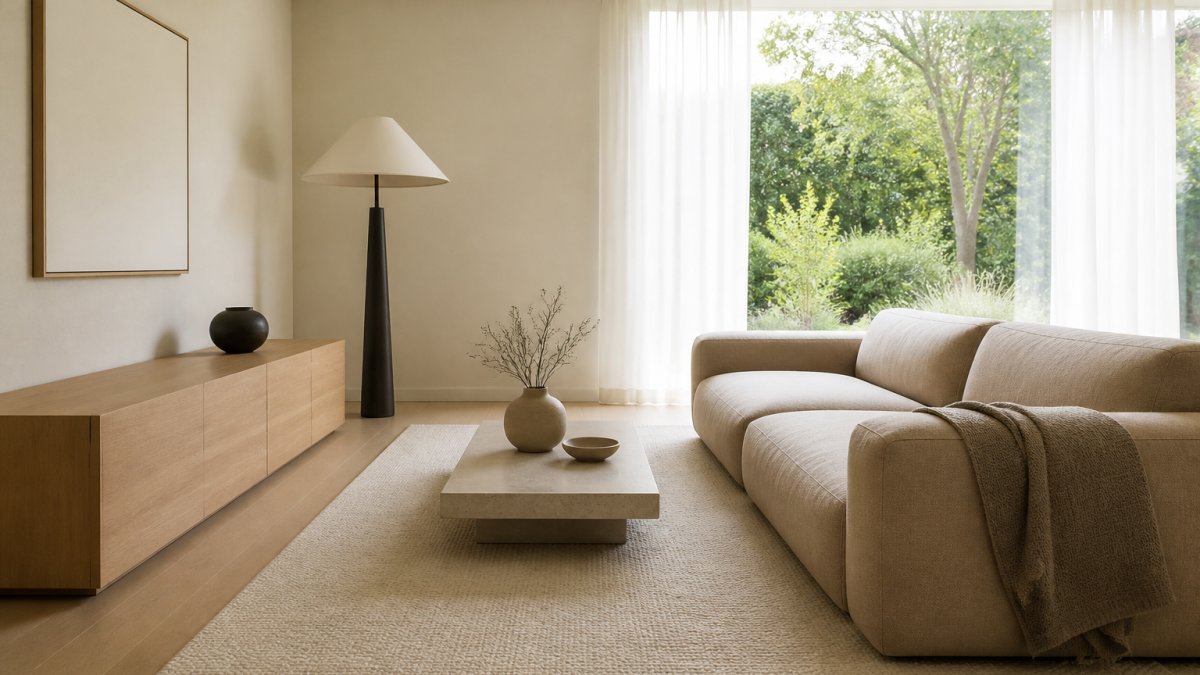
The best minimalist living room ideas start with furniture placement, not furniture shopping. Map the room's traffic paths first, then place pieces against them. Negative space is what makes a small living room feel bigger, and it costs nothing.
Start with a traffic-path map, not a mood board
Before you move a single piece of furniture, sketch the room and mark every doorway, window, and the path people actually walk between them. A common pattern in small apartments is a sofa pushed against the longest wall, which forces a narrow channel past the coffee table. Floating the sofa 12 to 18 inches off the wall often creates a wider walkway and a defined seating zone at the same time.
Use negative space as a deliberate material
Negative space is not leftover space. Treat it the way you would treat a wall: decide where it goes and protect it. In practice, that means leaving at least one wall mostly bare, keeping the floor clear under windows, and resisting the urge to fill the corner beside the sofa. A low-profile sofa and a single sculptural floor lamp will read calmer than a sofa flanked by two end tables, a floor lamp, and a plant stand.
Layer three light sources, not one
A single overhead fixture can make a pared-back room feel flatter. Plan three layers: ambient (ceiling or pendant), task (a floor lamp beside the reading chair), and accent (a low table lamp or a wall sconce washing a texture). In a minimalist living room, the statement fixture should be the only decorative object on its sightline.
Solve storage before you style
Storage can help keep cables, remotes, consoles, and chargers organized. A TV Console With Storage Cabinet handles the cable box, remotes, and game consoles behind closed doors, which is the minimalist move: hide the function, show the form. If you're working out what furniture actually fits a compact footprint, our guide to the best minimalist furniture for small apartments goes deeper on sizing.

Furniture placement and negative space
- Pull seating off the walls; floating a sofa creates a defined zone and often widens the walkway.
- Leave at least one wall mostly bare, and keep the floor clear under windows.
- Keep a clear path of at least 30 inches between every doorway.
A Measurable Decluttering and Editing Process for Every Room
Decluttering works when it has a number attached. Our editing process uses a fixed cap per surface so the decision is made for you, not debated each time. The goal is not an empty room; it is a room where every object has a job and a home.
Laurel King Bed with Pillow Headboard →
The three-bin edit
Work one surface at a time and use three bins: Keep, Relocate, and Release. The rule is that nothing goes back on the surface until the bin is sorted. This prevents the common trap of moving a pile from the counter to the drawer and calling it decluttering.
- Empty one surface completely. Shelf, counter, table, or console top.
- Return only items used in the last month. If you cannot remember using it, it goes in Relocate or Release.
- Cap the surface at three objects. One functional, one textural, one personal.
- Move everything else to hidden storage. Not to another surface, and not to a pile on the floor.
- Repeat room by room, entryway last. The entryway is the test case because it collects everything.
Make the cap room-specific, not universal
A single number does not fit every surface. A coffee table can hold three objects; a kitchen counter may only tolerate one appliance plus a cutting board; a bedside table often works best with a lamp and one book. Set the cap per surface before you start, write it down, and treat it as a rule rather than a preference.
Edit for real households, not showrooms
Minimalism has to survive children, pets, shared apartments, and mobility needs. A few practical adjustments keep the process realistic:
- Children: give each child one closed bin in the living area for their own items, and cap the open shelf at one basket. The rule is visible storage for what is used daily, hidden storage for everything else.
- Pets: keep one designated basket for leashes, toys, and towels near the door, and choose washable textiles so the edit does not become a cleaning burden.
- Shared spaces: agree on the surface cap with everyone who uses the room. A cap imposed on a roommate or partner tends to fail; a cap agreed on tends to hold.
The entryway test
The entryway is where the process either works or collapses, because it collects everything. A Corner Coat Rack is designed to fit into a corner and can hold coats, bags, and umbrellas. Pair it with one closed basket for keys and mail, and the surface cap becomes self-enforcing. For a full room-by-room plan using vertical and hidden storage, see our guide on how to organize small spaces without losing floor space.
Minimalist Interior Design Mistakes That Make Rooms Feel Sterile
The most common minimalist interior design mistakes all come from removing too much rather than choosing better. Sterile rooms are not the result of minimalism; they are the result of minimalism done without warmth.
- All-cool palette. No warm tone anywhere, so the room reads clinical.
- No texture. Smooth surfaces only, which flattens under light.
- Single-purpose rooms. Southern Living's 2026 roundup of design rules that no longer apply calls this one out directly.
Lighting deserves its own note. Layer three sources per room: overhead, task, and one low-level accent. A single sculptural floor lamp does more for a pared-back room than a second sofa.
Minimalism vs Maximalism: What Changed in 2026 Design Trends
Minimalism and maximalism are both alive in 2026, and the split is real. House Beautiful's 2026 designer survey reports bold color and big statements rising, with neutrals losing ground. That does not mean minimalism is finished.
The practical answer for most apartments is neither extreme. Take minimalism's discipline about clutter and negative space, then borrow maximalism's permission to use one bold piece.
Furnishing Your First Minimalist Apartment on a Budget
Budget minimalism is a sequencing problem, not a discount problem. Buy the pieces that anchor a room first, then wait. Most first apartments look mismatched because everything was bought in one weekend.
Phase it: bed and storage first, seating second, lighting and textiles last. A Laurel King Bed with Pillow Headboard with clean lines and an understated silhouette anchors a bedroom in one purchase, and the charcoal grey fabric works with warm or cool palettes.
Frequently Asked Questions
What are the rules of minimalist interior design?
Minimalist interior design rests on a few repeatable rules: function first, so every piece earns its place; clean lines and simple forms; a restrained color palette of two or three base tones; negative space left deliberately empty; and storage that hides clutter rather than displaying it. Decorative accessories stay limited to a few purposeful pieces. The goal is visual balance, not emptiness, so each room should still feel usable and comfortable rather than like a showroom.
How do you make a minimalist home feel warm and inviting?
Warm minimalist interior design swaps cold white and chrome for warm tones, natural materials and tactile textures. Add a wood dining table or a solid pine bench, layer a charcoal grey upholstered bed with a soft throw, and use one statement lighting piece instead of several small ones. Organic shapes and sculptural forms soften clean lines. The trick is restraint with warmth: fewer items, but each one textured, natural or softly colored so the room reads calm rather than clinical.
What colors work best in minimalist interiors in 2026?
A 2026 minimalist color palette leans on warm neutrals: oatmeal, sand, clay, soft taupe and warm off-white, grounded with earthy tones such as rust, olive or deep brown. Birla Opus lists warm neutral color palettes and natural textures among its seven minimalist interior trends for 2026. Keep to two or three base colors per room and repeat them across furniture, textiles and walls so the space feels intentional. One deeper accent, like charcoal, adds contrast without breaking the calm.
How do you declutter a room without making it feel empty?
Work in passes rather than one big purge. Empty the surface, sort items into keep, store and remove, then return only what you used in the past month. Give everything a home: a corner coat rack for bags and coats, a storage bench for blankets, a TV console with storage for media equipment, books, and other essentials. Finish by adding one textured or natural element, such as a plant or woven basket, so the cleared space still has visual interest.
What are common minimalist interior design mistakes to avoid?
The most common minimalist interior design mistakes are treating minimalism as emptiness, buying everything in matching white, ignoring storage so clutter returns, and skipping lighting until last. Others include over-complicated decor that fights the clean lines and choosing furniture that is too small for the room, which leaves it looking unbalanced. Plan storage first, vary textures even when colors are limited, and layer lighting in three levels so the room works after dark.
How can you mix minimalist design with current interior trends?
Take the trend and apply it through one element only. If warm minimalism appeals, change your color palette and textures rather than adding more objects. If statement lighting is trending, choose a single sculptural fixture as the focal point and keep everything else quiet. Forbes frames its 2026 interior design trends roundup around longevity, function and meaning, which suits minimalism well: pick trends you can live with for years, not a season.
Furnishing a pared-back apartment on a real budget means choosing fewer, better pieces and resisting the urge to fill every corner at once. Old Wells Trading Post curates modern home decor with clean lines and accessible pricing, including discounts of up to 50% on select items, so a minimalist room doesn't have to wait for a bigger budget. Start with the anchor pieces, layer warmth through texture, and get started with Old Wells Trading Post today.
